
Blog
Mushrooms For Health and Longevity
Consider adding functional mushrooms to your diet for better cellular functioning. Lion’s mane, cordyceps and reishi mushrooms all contain an amino acid known as ergothioneine which boasts powerful antioxidant properties while contributing to mitochondrial health.
Japanese studies on longevity have demonstrated the power of ergothioneine to extend lifespan and enhance cognitive function in mice. Real Mushrooms’ turkey tail contains 100% mushrooms without added starch or mycelium for maximum medicinal benefits.
Lion’s Mane
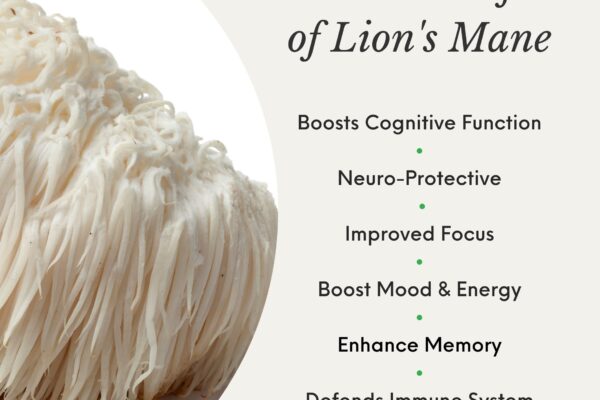
With Alzheimer’s and other neurological diseases robbing people of their memory, focus, and quality of life, our collective interest in maintaining brain health has never been higher. That’s why it delights us that Hericium erinaceus (lion’s mane mushroom) appears to be an excellent supplement to do just this – believed to support brain-growth signals by increasing nerve growth factor (NGF), reduce inflammation levels naturally occurring with ageing cells, and relieve oxidative stress commonly found within them.
The lion’s mane mushroom contains hericenones and erinacines that appear to stimulate nerve growth factor (NGF) production, helping new nerve cells grow and flourish while strengthening existing ones, protecting against damage while improving cognitive performance.
Research suggests lion’s mane could help protect against heart disease. Studies suggest it could reduce blood sugar, improve how fats are processed by the body, and stop cholesterol oxidising – all qualities necessary for longevity. If these benefits hold true for humans as well, incorporating it into an overall longevity routine could become essential.
Lion’s mane mushrooms may help activate immune cells called macrophages that fight infections while maintaining healthy gut microbiomes. Furthermore, it’s rich in antioxidants to scavenge free radicals and protect cells against damage or premature aging.
Before taking mushroom-based supplements, it’s wise to consult your physician first. While mushrooms tend to be well tolerated by most individuals, some may experience mild GI upset or nausea as well as skin rash. Furthermore, given that lion’s mane acts as an immunomodulator it would likely not be prudent for use if you suffer from any autoimmune conditions or take drugs which suppress immune systems.
If you want to give lion’s mane mushrooms a try, make sure that the supplement is GMP certified; this ensures it was produced in an environment meeting strict manufacturing standards and we suggest taking 1000-3000mg daily for best results.
Reishi
Reishi mushrooms (Ganoderma lucidum) are revered by Eastern traditions as semi-magical beings and even called the “mushroom of immortality”. Beautiful creatures that grow on decaying logs or stumps of deciduous trees in temperate forests across Asia, Europe and North America.
Reishi contains polysaccharides, triterpenoids and other bioactive compounds which contribute to its health-supportive properties. Studies have demonstrated the efficacy of Reishi’s polysaccharides for supporting healthy cell growth – something essential to the functioning of organs and our overall well-being. Anti-inflammatory compounds in Reishi also play an essential role in supporting circulation health.
Research indicates that Reishi can increase both the number and function of white blood cells – responsible for fighting off viruses, bacteria, and other pathogens that enter our bodies – as well as help balance our hormones and support healthy sleep.
Reishi’s immunomodulatory properties may be due to its beta-glucans, which influence innate immune system responses including antibody production. Reishi is thought to help ensure our body’s natural defenses are working as intended rather than attacking itself by attacking healthy cells instead. Multiple studies have confirmed its ability to reduce pro-inflammatory compounds within our bodies like leukocyte inflammatory markers.
Reishi has also been proven to be an adaptogen, meaning it helps reduce stress while aiding relaxation and restful, restorative sleep. According to research conducted on animals, Reishi may also help manage anxiety, depression and other mood conditions by modulating enzyme activity within the brain.
Reishi can generally be taken in recommended amounts without adverse side effects; however, some individuals may experience digestive discomfort if taking Reishi in powder or capsule form. Reishi may also help decrease blood pressure; those taking drugs that inhibit bleeding, such as aspirin, warfarin (Coumadin), heparin, clopidogrel (Plavix) and pentoxifylline (Trental), should refrain from taking Reishi without medical supervision.
Cordyceps
Cordyceps mushroom has gained widespread recognition since appearing in The Last of Us game and TV show, yet shouldn’t be taken as something dangerous. Instead, this non-poisonous species parasitizes caterpillars to produce its fruiting bodies for growth – an ancient Chinese medical treatment method still widely practiced today – while now being taken as an energy boosting and focus enhancing supplement by many modern consumers.
C. sinensis, more commonly referred to as Chinese caterpillar fungus or cordyceps militaris, is the species most frequently utilized in wellness products. Cultivated in controlled environments without insects present, its end product allegedly improves endurance, energy metabolism and immune function.
Cordyceps has also been claimed to possess neuroprotective properties. By inhibiting oxidative stress, inflammation, and glutamate excitotoxicity it may help prevent neuronal loss – these effects can play a pivotal role in protecting against neurodegenerative conditions like Alzheimer’s, Parkinson’s disease, multiple sclerosis (MS), amyotrophic lateral sclerosis (ALS).
Cordyceps may contain numerous bioactive compounds that contribute to its therapeutic effects, including polysaccharides, ergosterols, cordycepin and the nucleosides adenosine and schizandronic acid. Studies indicate these substances possess antioxidant, antitumor, immunomodulatory and other biological activities.
Cordyceps’ neuroprotective activity may be attributable to its ability to activate adenosine A1 receptors, which play a vital role in various physiological and pathological processes. A1 receptors can be found throughout the body but are most prominently found on neurons where they aid cell proliferation and differentiation processes.
Cordyceps’ ability to improve glucose tolerance and insulin sensitivity is another major advantage of its use, increasing expression of enzymes responsible for breaking down sugars in liver and kidney tissue – this may help lower risk of Type 2 diabetes mellitus; further research also indicates fermented mycelia and broth from C. sinensis have an antihyperglycemic effect in streptozotocin- and nicotinamide-induced diabetic rats; however, its exact mechanism remains unknown.
Chaga
Chaga (Inonotus obliquus) mushroom has long been revered for its health and longevity benefits, both mental and physical. As a parasite of living trunks of birch trees in cold circumboreal regions of the northern hemisphere, this parasitic fungus takes the appearance of burnt charcoal due to its abundant melanin content. An excellent antioxidant powerhouse, Chaga provides powerful anti-inflammatory, antibacterial, and anticancer support as well as being rich in vitamin D, calcium potassium selenium.
Chaga’s anti-aging properties can be attributed to its abundance of antioxidants and beta-D-glucans, which fight free radicals, protect the body from oxidative stress, promote cellular repair and regeneration and aid skin elasticity by stimulating autophagy (an enzyme which cleanses out toxins from your system) as well as its zinc content which boosts healing as a natural anti-inflammatory. It has even been shown to improve skin elasticity while diminishing fine lines and wrinkles by stimulating autophagic processes that rid yourself of them.
Studies have demonstrated that Chaga mushrooms can significantly boost white blood cell count and activity, helping the body fight viruses, bacteria and inflammation more effectively. They also stimulate production of an antitumor protein known as ergothione that has anticancer activities and may inhibit cancer cell growth according to research published in The Journal of Clinical Pathology.
Chaga can be purchased as dried chunks that can be ground into powder form for tea (chaga coffee) brewing, capsule form, tincture form, or ready-to-mix powder form. While foraging for it in its native habitat may be tempting, extensive experience and knowledge about what chaga looks like are essential as misidentified mushrooms can be poisonous.
Our Chaga Mushroom Extract comes from 100% fruiting bodies for maximum potency. When combined with other carefully chosen ingredients, it provides an extremely potent form of this revered nutrient that supports immune function, cognitive health and overall wellbeing for longevity. SensIQ Longevity features it as the star ingredient. With Lion’s Mane and Cordyceps included as complementary ingredients, SensIQ Longevity delivers a holistic approach to improving immunity while fighting cellular aging/disease at its source and improving overall quality of life over time.